MINSTRONG MINSLITE-A Carbon Monoxide Catalyst: Your Optimal Choice
With increasingly stringent industrial emission regulations and rising demands for air quality, carbon monoxide (CO) control has become an indispensable part of industrial production. Carbon monoxide, a toxic gas, is widely present in various industrial exhaust gases and vehicle emissions. Among numerous control technologies, catalytic oxidation technology is widely recognized as one of the most effective and economical methods. This article will explain in detail why high-efficiency catalysts, represented by MINSTRONG MINSLITE-A, are the optimal solution to this challenge.
Carbon monoxide control is becoming increasingly important in industrial exhaust gas treatment, underground parking lot ventilation, and exhaust emissions from various combustion devices. Carbon monoxide is a colorless, odorless, and toxic gas that poses a serious threat to human health. Catalytic oxidation technology, as the most direct, simple, inexpensive, and effective method for eliminating carbon monoxide, is receiving unprecedented attention.
A Highly Efficient Purifier
The core principle of carbon monoxide catalytic oxidation is to use a catalyst to react carbon monoxide with oxygen at a relatively low temperature, converting it into non-toxic carbon dioxide. The key to this process lies in the efficient and stable operation of the catalyst. The MINSTRONG MINSLITE-A catalyst is designed based on this principle. By providing highly active reaction sites, it significantly reduces the activation energy of the reaction, allowing the oxidation reaction to proceed efficiently at room temperature or even lower.
Although carbon monoxide exists at a certain background concentration in nature, its concentration often exceeds safe levels in specific locations such as industrial areas, traffic tunnels, or enclosed parking lots, posing a direct threat to human health. Mild poisoning may cause headaches and dizziness, while long-term or high-concentration exposure can be life-threatening. Therefore, occupational safety and health regulatory agencies in various countries have set strict thresholds for carbon monoxide concentrations in the workplace. With increasingly stringent environmental and safety requirements worldwide, more and more companies need to install efficient control systems to eliminate carbon monoxide in exhaust gases to meet increasingly stringent standards. This provides a broad stage for the application of catalytic technology, and the MINSTRONG MINSLITE-A catalyst is an ideal choice in this field.
The Urgent Need to Address Residual Carbon Monoxide
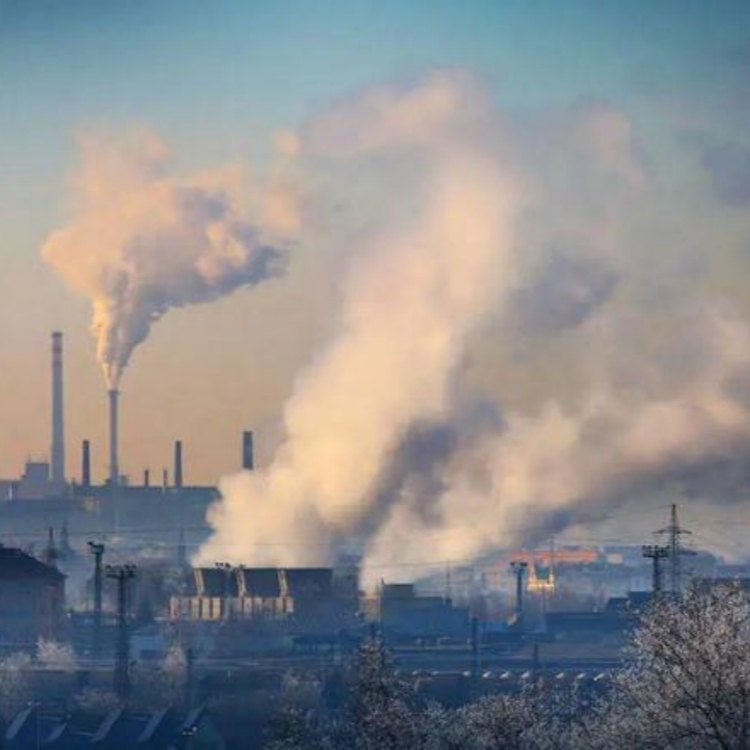
In various combustion or industrial production processes, incomplete combustion of fuels often results in exhaust gases containing large amounts of carbon monoxide. Untreated emissions of these waste gases cause severe air pollution. To address the challenges of emission control, businesses and utilities must invest in building efficient exhaust gas purification systems. Achieving regulatory emission standards in the most cost-effective way has become a key decision for businesses. Currently, while several carbon monoxide control technologies exist on the market, their cost-effectiveness and purification efficiency vary considerably.
High-Temperature Thermal Destruction: Carbon monoxide can be directly converted into carbon dioxide through high-temperature combustion. However, carbon monoxide has a high ignition point, typically above 580°C for effective combustion. While high-temperature thermal oxidation (or thermal incineration) is effective, it requires heating a large volume of waste gas to hundreds of degrees Celsius, resulting in extremely high equipment investment costs and significant fuel or energy consumption, leading to high operating costs.
Traditional Precious Metal Catalysis: Precious metal catalysts (such as platinum and palladium-based catalysts) are widely used for the catalytic purification of carbon monoxide due to their excellent low-temperature activity. They can achieve efficient conversion at relatively low temperatures (e.g., 150°C-300°C). However, the scarcity and high price of precious metals limit their industrial application in many fields. Especially when treating large-volume, low-concentration industrial flue gas, the required catalyst volume is enormous, making systems using precious metal catalysts extremely expensive and economically unviable.
High-Efficiency Catalytic Conversion – Advantages of MINSLITE-A
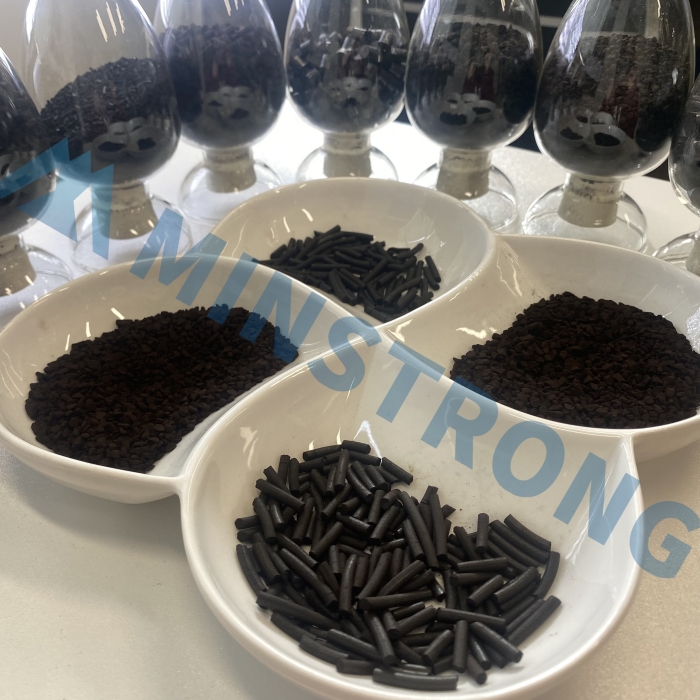
The MINSTRONG MINSLITE-A catalyst uses advanced manganese-based composite oxides as the active component (an extension of the manganese dioxide-based technology platform). In this catalytic process, the catalyst acts like a "molecular scissors," efficiently dissociating carbon monoxide molecules and combining them with oxygen, without being consumed in the reaction. Unlike thermal destruction, the catalytic reaction occurs only on the catalyst surface, requiring extremely low energy. Unlike precious metal catalysts, MINSLITE-A significantly reduces material costs while maintaining high efficiency.
A key metric for catalyst performance is its activation temperature. The biggest technological breakthrough of the MINSLITE-A catalyst lies in its excellent ambient temperature and humidity catalytic performance. It can rapidly initiate catalytic reactions at room temperature (25°C) or even lower, without additional heating energy consumption. This means the system does not require large heat exchangers and heaters, directly reducing initial investment and long-term operating energy consumption. Furthermore, its manganese oxide-based active component is abundant and its cost is far lower than that of precious metals such as platinum and palladium, truly achieving a perfect balance between performance and cost.
The Core Technology of MINSLITE-A
The MINSTRONG MINSLITE-A catalyst's efficient decomposition of carbon monoxide at room temperature is attributed to its unique nanoscale porous structure and the redox cycling capability of high-valence manganese ions. This structure provides a huge specific surface area, enabling the catalyst to capture and convert carbon monoxide in extremely short space velocities and contact times. Compared to high-temperature thermal oxidation or certain precious metal systems that require contact times of several seconds, MINSLITE-A requires an extremely short contact time. This means that a smaller catalyst bed can be used to treat the same amount of waste gas, significantly reducing reactor size and cost.
Research shows that catalysts based on transition metal oxides, such as oxides of manganese, cobalt, and copper, can generate lattice defects and oxygen vacancies through specific preparation processes. These defects are key to activating oxygen molecules. MINSLITE-A utilizes this principle, optimizing the preparation process to enrich the catalyst surface with active oxygen species. This allows for the continuous oxidation of CO to CO₂ at room temperature, unaffected by fluctuations in inlet CO concentration—whether it's a trace leak of a few ppm or a high concentration of waste gas reaching several percentage points, MINSLITE-A maintains a consistently high conversion efficiency.
Linear Velocity and Space Velocity Design
In system design, by rationally controlling the linear velocity and space velocity through the catalyst bed, MINSLITE-A can achieve a carbon monoxide destruction efficiency exceeding 99%. It typically uses a regular honeycomb ceramic or metal honeycomb as a carrier, coated with a highly active nano-manganese-based catalyst layer. This structure ensures high activity while minimizing system pressure drop (wind resistance). Catalyst manufacturers can provide professional reactor design support to ensure the system operates under optimal kinetic conditions.
Usage Environment and Precautions
The MINSTRONG MINSLITE-A catalyst exhibits excellent catalytic activity under normal dry conditions. It is important to note that this catalyst is sensitive to high humidity environments, and its performance depends on dry operating conditions.
Because water molecules and carbon monoxide compete for adsorption on the catalyst surface, prolonged exposure to extremely high humidity (e.g., near-saturation relative humidity) or direct liquid water in the reactor will cause moisture to preferentially occupy the catalyst's active sites, hindering effective contact and reaction of carbon monoxide, thus leading to a decrease in catalytic efficiency. Therefore, ensuring the dryness of the inlet gas flow is a crucial prerequisite for maintaining high catalyst performance and long lifespan in practical applications.
For humid environments, the following protective measures are recommended:
Inlet gas preheating: Slightly increase the temperature of the gas before it enters the catalyst bed (e.g., 5-10°C) to reduce relative humidity and prevent water vapor condensation.
Pre-dehumidification: Add a dehumidification device (e.g., condensate dehumidifier, desiccant filter bed, etc.) at the front end of the system to pre-remove moisture from the gas flow.
Avoid liquid water: Strictly prevent condensate or process water from directly impacting the catalyst bed.
Furthermore, long-term exposure of the catalyst to compounds containing sulfur, phosphorus, silicon, or halogens should be avoided. These substances are known as catalyst poisons; they can undergo irreversible chemical reactions with the active sites, leading to permanent catalyst deactivation.
Comprehensive Benefits of MINSLITE-A
Compared to high-temperature thermal destruction or traditional precious metal catalysis, MINSTRONG MINSLITE-A manganese-based carbon monoxide catalyst offers the following significant advantages:
Extremely high destruction efficiency: Achieving CO conversion rates exceeding 99%;
Extremely short contact time: Thanks to its high specific surface area and ultra-high activity, the reactor volume can be designed to be more compact;
Room temperature operation: No heating required, significantly reducing operating energy consumption;
Lower capital investment: The system requires no complex preheating and heat exchange equipment;
Extremely low operating costs: Room temperature operation consumes no energy, and the catalyst itself is far less expensive than precious metal systems;
Extremely long catalyst lifetime: The catalyst is not consumed during the reaction and exhibits good resistance to poisoning, with a lifetime of several years.
These advantages directly translate into quantifiable economic benefits. The initial investment in a MINSLITE-A-based catalytic system is typically only one-third to one-half that of a thermal oxidation system, while the long-term operating costs (mainly energy consumption) are far lower than those of thermal oxidation systems. It ensures the complete conversion of carbon monoxide into harmless carbon dioxide under various complex operating conditions, helping companies confidently cope with increasingly stringent emission regulations and minimize the financial burden of environmental compliance.
MINSTRONG MINSLITE-A manganese-based carbon monoxide catalyst, with its superior room-temperature activity, significant cost-effectiveness, and compact, efficient system design, is becoming a technological benchmark in the field of carbon monoxide control. Whether in industrial exhaust gas purification, underground parking garage ventilation, or civilian applications such as mine safety and air purification, MINSLITE-A provides an economical and practical solution. Facing increasingly stringent emission standards in the future, choosing MINSLITE-A means choosing to achieve clean production and compliant emissions in the lowest cost and simplest way.
author:kaka
date:2026/3/10


 minstrong