The Ultimate Guide to Carbon Monoxide Catalyst Selection: Precious Metals vs. Non-Precious Metals – Which to Choose?
In the field of industrial waste gas treatment, carbon monoxide catalysts are the core material for ensuring emission compliance. Faced with a dazzling array of products on the market, the most perplexing question for purchasing managers is: how to choose between precious metal catalysts and non-precious metal catalysts?
I. Precious Metal Catalysts: Performance Kings
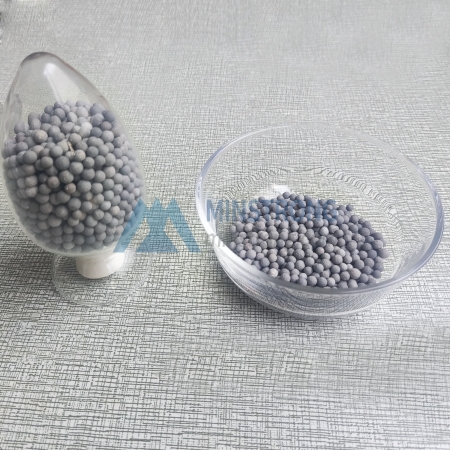
Precious metal catalysts primarily use platinum (Pt), palladium (Pd), and rhodium (Rh) as active components, supported on honeycomb ceramics or metal carriers.
 Core Advantages:
Excellent Low-Temperature Activity: Ignition temperatures can be as low as 80-120℃, especially suitable for applications with low flue gas temperatures.
Strong Resistance to Poisoning: Good tolerance to poisons such as sulfur and halogens, with a service life of 3-5 years.
High Purification Efficiency: CO conversion rate is stably maintained above 98%.
Main Disadvantages:
Highly affected by fluctuations in the platinum group metals market price; initial investment costs are 3-5 times higher than non-precious metal catalysts.
Prone to sintering deactivation at high temperatures.
II. Non-Precious Metal Catalysts: Cost-Effective Choice
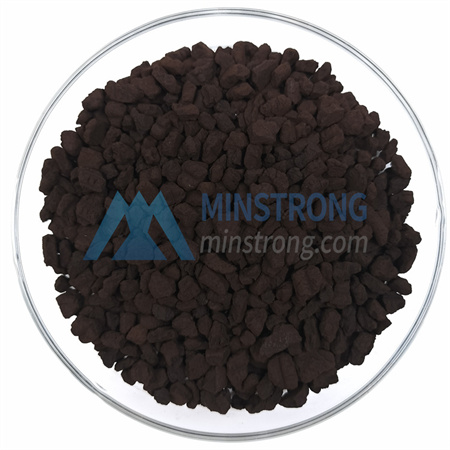
Non-precious metal catalysts are mainly composed of composite oxides of copper (Cu), manganese (Mn), cobalt (Co), and cerium (Ce), often formed using impregnation or co-precipitation methods.
Core Advantages:
Excellent Low-Temperature Activity: Ignition temperatures can be as low as 80-120℃, especially suitable for applications with low flue gas temperatures.
Strong Resistance to Poisoning: Good tolerance to poisons such as sulfur and halogens, with a service life of 3-5 years.
High Purification Efficiency: CO conversion rate is stably maintained above 98%.
Main Disadvantages:
Highly affected by fluctuations in the platinum group metals market price; initial investment costs are 3-5 times higher than non-precious metal catalysts.
Prone to sintering deactivation at high temperatures.
II. Non-Precious Metal Catalysts: Cost-Effective Choice
Non-precious metal catalysts are mainly composed of composite oxides of copper (Cu), manganese (Mn), cobalt (Co), and cerium (Ce), often formed using impregnation or co-precipitation methods.
 Core Advantages:
Significant Cost Advantage: Raw materials are widely available, with prices only 20%-30% of precious metals.
Good Thermal Stability: Stable performance under operating conditions of 300-500℃.
Resource Sustainability: Unaffected by geopolitics, resulting in a more stable supply chain.
Main Weaknesses:
High ignition temperature, typically requiring above 150-200℃ for activation.
Sensitive to toxic substances such as sulfur and chlorine, resulting in a relatively short lifespan.
III. How Should Enterprises Select Catalysts Based on Their Own Circumstances?
Operating temperature is a critical dividing line. If the flue gas temperature is stable above 150℃ and the sulfur content is low, non-precious metal catalysts can significantly reduce operating costs; if temperature fluctuations are large or cold starts are required, the low-temperature activity advantage of precious metals is irreplaceable.
The composition of the exhaust gas determines the lifespan. For chlorine- and sulfur-containing exhaust gases, it is recommended to prioritize precious metal systems with stronger resistance to toxic substances; for clean exhaust gas scenarios, non-precious metals are perfectly adequate.
Lifecycle Cost Analysis. While precious metal catalysts have a high initial investment, the precious metals in spent catalysts can be recovered, with a residual value of 30%-50%; non-precious metal catalysts, on the other hand, have almost no recycling value.
Core Advantages:
Significant Cost Advantage: Raw materials are widely available, with prices only 20%-30% of precious metals.
Good Thermal Stability: Stable performance under operating conditions of 300-500℃.
Resource Sustainability: Unaffected by geopolitics, resulting in a more stable supply chain.
Main Weaknesses:
High ignition temperature, typically requiring above 150-200℃ for activation.
Sensitive to toxic substances such as sulfur and chlorine, resulting in a relatively short lifespan.
III. How Should Enterprises Select Catalysts Based on Their Own Circumstances?
Operating temperature is a critical dividing line. If the flue gas temperature is stable above 150℃ and the sulfur content is low, non-precious metal catalysts can significantly reduce operating costs; if temperature fluctuations are large or cold starts are required, the low-temperature activity advantage of precious metals is irreplaceable.
The composition of the exhaust gas determines the lifespan. For chlorine- and sulfur-containing exhaust gases, it is recommended to prioritize precious metal systems with stronger resistance to toxic substances; for clean exhaust gas scenarios, non-precious metals are perfectly adequate.
Lifecycle Cost Analysis. While precious metal catalysts have a high initial investment, the precious metals in spent catalysts can be recovered, with a residual value of 30%-50%; non-precious metal catalysts, on the other hand, have almost no recycling value.
IV. Professional Advice
There is no absolutely best catalyst, only the one most suitable for your operating conditions. We recommend that companies complete exhaust gas composition testing and confirm operating parameters before selecting a catalyst. For customized selection solutions, please contact our technical team for free operating condition diagnostics and catalyst matching services.
AUHTOR:KAKA
DATE:2026/4/3


 minstrong