How to Select an Ozone Decomposition Catalyst?
Ozone decomposition catalysts are critical consumables in various industrial applications, such as industrial waste gas treatment and air purification. However, many enterprises discover that the catalysts they purchase either lose their efficacy within a few months, see their efficiency cut in half in high-humidity environments, or even trigger environmental penalties due to ozone leakage. Where does the problem lie? And how does one go about making a scientific selection? The following five dimensions will help you gain a comprehensive and clear understanding of the process.
 First, Assess Operating Conditions: Temperature, Humidity, and Impurities—None Can Be Overlooked
Pain Point: Ignoring actual operating conditions and substituting field requirements with laboratory data.
Temperature: Low temperatures (<10°C) can significantly reduce catalyst activity. For winter operations in northern regions or in cold storage environments, it is imperative to select a low-temperature-specific ozone decomposition catalyst.
Humidity: Water molecules act as "competitors" for active sites on the catalyst surface. When relative humidity exceeds 60%, the efficiency of standard catalysts declines rapidly. Moisture-resistant catalysts—achieved through hydrophobic modification or rare-earth doping—can operate stably even at a relative humidity of 90%.
Impurities: Silicon-organic compounds, sulfides, and phosphides present in waste gas can lead to catalyst "poisoning," resulting in irreversible deactivation. Waste streams containing silicon (such as those from spray-painting operations or electronics manufacturing plants) require the selection of a poisoning-resistant catalyst formulation.
II. Next, Consider Space Velocity and Pressure Drop: Balancing Processing Capacity with Energy Consumption
Space Velocity (h⁻¹) represents the volume of gas processed per hour per unit volume of catalyst. A higher space velocity indicates greater processing capacity; however, an excessively high space velocity reduces the contact time between the gas and the catalyst, thereby lowering decomposition efficiency. High-Flow Scenarios (e.g., workshop exhaust): Opt for catalysts with a high space velocity (≥ 15,000 h⁻¹); this allows for a more compact equipment footprint and reduces fan energy consumption.
Low-Concentration, Low-Flow Scenarios: A lower space velocity may be selected to ensure a decomposition efficiency exceeding 99%.
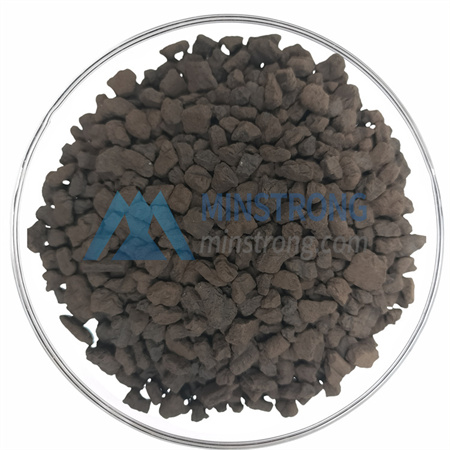
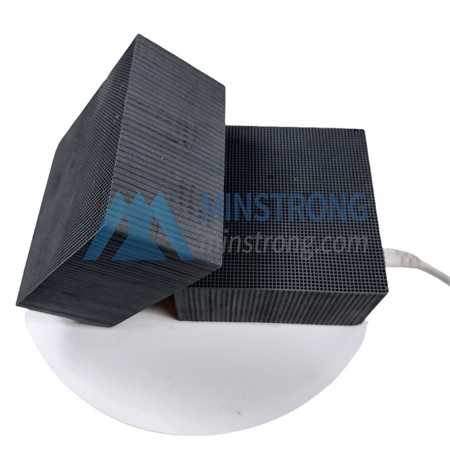
Regarding Pressure Drop: Honeycomb catalysts feature a low pressure drop and are energy-efficient; granular catalysts exhibit a higher pressure drop but possess superior resistance to clogging, making them suitable for exhaust streams containing particulate matter.
First, Assess Operating Conditions: Temperature, Humidity, and Impurities—None Can Be Overlooked
Pain Point: Ignoring actual operating conditions and substituting field requirements with laboratory data.
Temperature: Low temperatures (<10°C) can significantly reduce catalyst activity. For winter operations in northern regions or in cold storage environments, it is imperative to select a low-temperature-specific ozone decomposition catalyst.
Humidity: Water molecules act as "competitors" for active sites on the catalyst surface. When relative humidity exceeds 60%, the efficiency of standard catalysts declines rapidly. Moisture-resistant catalysts—achieved through hydrophobic modification or rare-earth doping—can operate stably even at a relative humidity of 90%.
Impurities: Silicon-organic compounds, sulfides, and phosphides present in waste gas can lead to catalyst "poisoning," resulting in irreversible deactivation. Waste streams containing silicon (such as those from spray-painting operations or electronics manufacturing plants) require the selection of a poisoning-resistant catalyst formulation.
II. Next, Consider Space Velocity and Pressure Drop: Balancing Processing Capacity with Energy Consumption
Space Velocity (h⁻¹) represents the volume of gas processed per hour per unit volume of catalyst. A higher space velocity indicates greater processing capacity; however, an excessively high space velocity reduces the contact time between the gas and the catalyst, thereby lowering decomposition efficiency. High-Flow Scenarios (e.g., workshop exhaust): Opt for catalysts with a high space velocity (≥ 15,000 h⁻¹); this allows for a more compact equipment footprint and reduces fan energy consumption.
Low-Concentration, Low-Flow Scenarios: A lower space velocity may be selected to ensure a decomposition efficiency exceeding 99%.
Regarding Pressure Drop: Honeycomb catalysts feature a low pressure drop and are energy-efficient; granular catalysts exhibit a higher pressure drop but possess superior resistance to clogging, making them suitable for exhaust streams containing particulate matter.
 III. Decomposition Efficiency Is Not Everything; Service Life and Stability Are the Core Priorities
Many enterprises fixate solely on the "99% decomposition efficiency" figure while overlooking the efficiency decay curve. A high-quality catalyst should guarantee that its efficiency remains above 95% throughout its entire service life (typically 1 to 3 years). Demand that suppliers provide data from accelerated aging tests or actual operational case studies under similar working conditions, rather than merely presenting a laboratory report.
IV. Calculate the Total Life-Cycle Cost to Avoid the "Low-Price Trap"
The reality of low-priced catalysts: while the unit price is low, they suffer from a short service life, require frequent replacement, and result in significant losses due to downtime. Example: Catalyst A costs 2,000 RMB/L with a service life of 2 years; Catalyst B costs 1,000 RMB/L with a service life of 6 months. The annualized cost is 1,000 RMB/L·year for Catalyst A, but 2,000 RMB/L·year—twice as much—for Catalyst B.
Additional factors to calculate include: labor costs for replacement, losses incurred during production downtime, and potential environmental fines resulting from failure to meet emission standards. The total life-cycle cost serves as the true benchmark for selecting the right catalyst.
V. Choose a Reliable Supplier: Technology, Case Studies, and Service Are All Indispensable
Technical Strength: Do they hold patents for catalyst modifications—such as resistance to moisture or catalytic poisoning? Do they have a background in industry-academia-research collaboration?
Application Case Studies: Have their products been successfully implemented in similar settings, such as industrial exhaust treatment plants, wastewater treatment facilities, or chemical manufacturing sites? Can they provide actual field operational data?
After-Sales Service: Do they offer free diagnostics of operating conditions, customized selection solutions, and rapid response support (e.g., 24-hour technical assistance)?
III. Decomposition Efficiency Is Not Everything; Service Life and Stability Are the Core Priorities
Many enterprises fixate solely on the "99% decomposition efficiency" figure while overlooking the efficiency decay curve. A high-quality catalyst should guarantee that its efficiency remains above 95% throughout its entire service life (typically 1 to 3 years). Demand that suppliers provide data from accelerated aging tests or actual operational case studies under similar working conditions, rather than merely presenting a laboratory report.
IV. Calculate the Total Life-Cycle Cost to Avoid the "Low-Price Trap"
The reality of low-priced catalysts: while the unit price is low, they suffer from a short service life, require frequent replacement, and result in significant losses due to downtime. Example: Catalyst A costs 2,000 RMB/L with a service life of 2 years; Catalyst B costs 1,000 RMB/L with a service life of 6 months. The annualized cost is 1,000 RMB/L·year for Catalyst A, but 2,000 RMB/L·year—twice as much—for Catalyst B.
Additional factors to calculate include: labor costs for replacement, losses incurred during production downtime, and potential environmental fines resulting from failure to meet emission standards. The total life-cycle cost serves as the true benchmark for selecting the right catalyst.
V. Choose a Reliable Supplier: Technology, Case Studies, and Service Are All Indispensable
Technical Strength: Do they hold patents for catalyst modifications—such as resistance to moisture or catalytic poisoning? Do they have a background in industry-academia-research collaboration?
Application Case Studies: Have their products been successfully implemented in similar settings, such as industrial exhaust treatment plants, wastewater treatment facilities, or chemical manufacturing sites? Can they provide actual field operational data?
After-Sales Service: Do they offer free diagnostics of operating conditions, customized selection solutions, and rapid response support (e.g., 24-hour technical assistance)?
Selecting the right ozone decomposition catalyst need not be complicated: Define your specific operating conditions → Balance space velocity against efficiency requirements → Prioritize resistance to moisture and catalytic poisoning → Calculate the annualized cost → Choose a reliable brand. Contact our technical team today to receive a customized selection plan, ensuring your ozone abatement system operates efficiently, safely, and cost-effectively.
author:kaka
date:2026/4/14


 minstrong