What Is a Hydrogen Removal Catalyst?
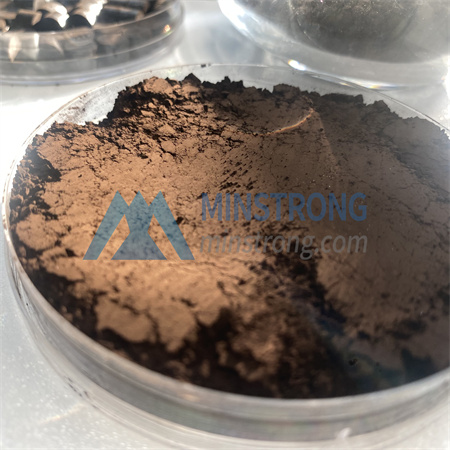
A hydrogen removal catalyst is a functional material designed to reduce hydrogen concentration in a gas environment through adsorption, chemical reaction, catalytic conversion, or a combination of these mechanisms. By removing or converting hydrogen from the gas phase, these materials help maintain controlled gas compositions and meet the purity requirements of industrial processes.
It is important to understand that the term “hydrogen removal catalyst” does not refer to one specific chemical composition. Instead, it describes a category of functional materials capable of removing hydrogen from gas streams. Different materials may operate through different mechanisms. Some primarily rely on chemical adsorption to immobilize hydrogen, while others promote catalytic reactions that convert hydrogen into more stable products.
Therefore, selecting a hydrogen removal catalyst for an industrial gas purification system should not be based simply on whether the material can remove hydrogen. The actual gas composition, hydrogen concentration, operating temperature, flow rate, humidity, pressure, and required outlet concentration should all be considered.
How Does a Hydrogen Removal Catalyst Work?
The hydrogen removal process generally takes place at the surface of the functional material. Hydrogen molecules first diffuse from the gas phase to active sites on the catalyst surface, where they can be adsorbed, activated, or involved in subsequent chemical reactions.
For materials that primarily rely on chemical adsorption, hydrogen reacts with active components and forms relatively stable compounds. In this process, hydrogen is effectively removed from the gas phase. Such materials may provide high hydrogen removal capacity, but their active sites can gradually be consumed as the material approaches saturation. Therefore, both capacity and service life must be considered.
For catalytic removal systems, the catalyst itself does not necessarily become the main reactant. Instead, it lowers the activation energy of the reaction between hydrogen and another suitable reactant. Under appropriate conditions, hydrogen may undergo catalytic oxidation or another conversion pathway to form stable products. In this case, catalyst activity, reaction temperature, and gas composition have a direct influence on hydrogen removal performance.
Therefore, “hydrogen adsorption” and “catalytic hydrogen removal” are not technically identical concepts. Before selecting a material, it is important to determine whether the intended process is based primarily on adsorption and fixation or on catalytic conversion.
What Are the Key Performance Indicators of Hydrogen Removal Catalysts?
The performance of a hydrogen removal catalyst should not be evaluated using a single parameter. Capacity, removal efficiency, operating conditions, and long-term stability should be considered together.
1. Hydrogen Removal Capacity
Hydrogen removal capacity indicates how much hydrogen a material can remove during its service life. It is generally evaluated based on the amount of hydrogen removed per unit mass of material under defined test conditions.
For batch or enclosed systems, capacity is particularly important because it directly affects replacement intervals and operating costs. For continuous-flow gas purification systems, capacity should be evaluated together with gas flow rate, inlet hydrogen concentration, and the required outlet concentration to estimate the actual service life of the material.
2. Hydrogen Removal Efficiency
Hydrogen removal efficiency describes the ability of the material to reduce hydrogen concentration under specific operating conditions. The same catalyst can exhibit significantly different removal performance when temperature, gas velocity, inlet concentration, or gas composition changes.
For this reason, laboratory test results should always be interpreted in relation to actual operating conditions. A high removal efficiency measured under one standardized condition does not necessarily mean that the material will deliver the same performance in a real industrial system.
3. Operating Temperature
Different hydrogen removal materials have different optimum operating temperature ranges. Some materials can function effectively at ambient temperature, while certain catalytic systems require elevated temperatures to achieve sufficient reaction rates.
For semiconductor, electronic material, and high-purity gas applications, low operating temperature, high gas purity, and low contamination are often important requirements. Therefore, operating temperature should always be evaluated together with the specific process conditions.
4. Long-Term Stability
Industrial gas purification systems often operate continuously for extended periods, making long-term stability more important than short-term initial activity.
Water vapor, oxygen, sulfur-containing compounds, halogen-containing compounds, and other impurities may occupy active sites or modify the surface properties of the material, resulting in performance degradation. Therefore, catalyst evaluation should include moisture resistance, impurity tolerance, and performance retention during long-term operation.
Where Are Hydrogen Removal Catalysts Used?
Hydrogen removal catalysts are mainly used in industrial environments where hydrogen concentration and gas purity must be carefully controlled.
In semiconductor and electronic material manufacturing, certain processes require strict control of gas purity and trace impurities. Hydrogen and other trace components may affect controlled process atmospheres, making appropriate gas purification materials necessary in specific applications.
In new energy and battery-related manufacturing environments, hydrogen may originate from material reactions, equipment operation, or specific process steps. In enclosed or controlled-atmosphere environments, reducing hydrogen concentration can help maintain stable process conditions.
In high-purity gas purification systems, hydrogen removal materials can be used to reduce residual hydrogen in a specific gas stream. When strict outlet hydrogen specifications are required, catalyst capacity, selectivity, and long-term stability become particularly important.
Hydrogen removal or catalytic hydrogen conversion materials may also be used in selected enclosed equipment, inert-gas environments, and industrial gas circulation systems, depending on the specific process requirements.
How to Select a Hydrogen Removal Catalyst for Industrial Applications?
The first step in catalyst selection is to identify the hydrogen source, concentration range, and treatment mode. For continuous removal at low hydrogen concentrations, low-concentration removal performance and long-term stability should receive particular attention. For high-concentration or periodic treatment, material capacity, reaction rate, and safe operating conditions become more important.
The actual gas conditions should then be evaluated, including temperature, pressure, flow rate, humidity, and the presence of potential contaminants. A material that performs well under laboratory conditions may have a significantly shorter service life when exposed to high humidity, high gas velocity, or complex gas compositions in an industrial system.
In addition, mechanical strength, particle size or structural form, pressure drop, and loading method should be considered. For fixed-bed purification equipment, the catalyst must not only provide effective hydrogen removal but also withstand long-term gas flow and mechanical operating conditions.
Supplier evaluation should not be based solely on material price. Hydrogen removal capacity data, long-term stability data, actual operating-condition validation, and technical service responsiveness should all be considered. For long-term industrial operation, reliable technical support can also help determine appropriate catalyst loading, replacement intervals, and operating conditions.
Future Development Trends of Hydrogen Removal Catalysts
As semiconductor, new energy, high-purity gas, and advanced manufacturing industries continue to demand tighter gas purity control, hydrogen removal materials are developing toward higher capacity, faster reaction rates, and longer service life.
Future material development will need to improve hydrogen removal capacity while reducing sensitivity to temperature, humidity, and complex gas compositions. At the same time, particle structure, mechanical strength, and mass-transfer characteristics will become increasingly important factors in industrial applications.
From an engineering perspective, the best hydrogen removal catalyst is not necessarily the material with the highest single laboratory performance indicator. Instead, it should provide a stable, predictable, and economically viable hydrogen removal performance under the target operating conditions.
Therefore, hydrogen removal catalyst selection should be based on actual gas conditions and should comprehensively evaluate hydrogen removal capacity, removal efficiency, operating temperature, impurity resistance, long-term stability, mechanical properties, and technical support capabilities. This approach provides a more reliable basis for selecting a material suitable for industrial gas purification systems.
author:kaka
date:2026/8/13


 minstrong