What Is Ethylene Oxide Catalyst?
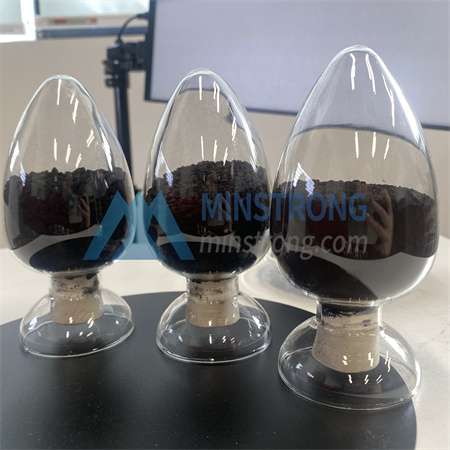
Ethylene oxide catalyst is a functional catalytic material designed to remove ethylene oxide emissions from industrial waste gas. It promotes the oxidation and decomposition of ethylene oxide (EO) at relatively low temperatures, converting this organic pollutant into harmless carbon dioxide (CO₂) and water (H₂O).
Compared with traditional thermal oxidation technologies, catalytic oxidation can reduce the required reaction temperature, improve energy efficiency, and maintain high pollutant removal performance. Therefore, ethylene oxide catalysts are widely applied in medical sterilization, chemical processes, and industrial VOC waste gas treatment systems.
Why Does Ethylene Oxide Require Catalytic Treatment?
Ethylene oxide is a highly reactive organic compound widely used in industrial processes due to its excellent penetration ability and sterilization performance. However, during production, storage, transportation, and application, a certain amount of ethylene oxide may enter the exhaust gas system.
As a type of volatile organic compound (VOC), ethylene oxide requires effective treatment before discharge to meet increasingly strict environmental requirements. Direct emission may cause environmental concerns and make compliance with industrial emission standards difficult.
Ethylene oxide catalyst reduces the activation energy of the oxidation reaction, allowing the decomposition process to occur efficiently at lower temperatures while improving treatment performance and reducing energy consumption.
How Does Ethylene Oxide Catalyst Work?
Ethylene oxide catalysts mainly work through a surface catalytic oxidation mechanism.
When ethylene oxide-containing gas passes through the catalyst bed, ethylene oxide molecules are adsorbed onto active sites on the catalyst surface. Under the influence of catalytic active components, oxygen molecules are activated and participate in oxidation reactions, gradually breaking down the organic structure of ethylene oxide into stable carbon dioxide and water.
The main catalytic oxidation process includes:
-
Ethylene oxide molecules are adsorbed onto the catalyst surface;
-
Active sites promote oxygen activation;
-
The molecular structure of ethylene oxide undergoes oxidation and decomposition;
-
The final products are carbon dioxide and water.
During normal operation, the catalyst mainly provides active reaction sites and does not act as a reactant. Therefore, it can maintain catalytic activity for an extended operating period.
Main Applications of Ethylene Oxide Catalyst
1. Medical Sterilization Industry
Ethylene oxide is widely used for sterilizing medical devices and special materials because of its strong sterilization capability. After sterilization, exhaust gas may contain residual ethylene oxide that requires proper treatment.
Ethylene oxide catalysts can continuously treat low-concentration ethylene oxide emissions and convert them into harmless substances, achieving stable purification performance.
2. Chemical Production Processes
In industrial systems involving ethylene oxide production, storage, transportation, or related chemical processes, exhaust gas may contain ethylene oxide at different concentrations.
Catalytic oxidation systems equipped with suitable catalysts can effectively reduce ethylene oxide emissions and improve overall waste gas treatment efficiency.
3. Industrial VOC Waste Gas Treatment
Since ethylene oxide belongs to the VOC category, ethylene oxide catalysts can also be integrated into industrial VOC catalytic oxidation systems to improve the removal efficiency of organic pollutants.
Key Factors Affecting Ethylene Oxide Catalyst Performance
1. Reaction Temperature
Temperature is one of the most important factors affecting catalytic oxidation efficiency. Different catalyst materials have different optimal operating temperature ranges.
Proper temperature control can maintain high conversion efficiency while reducing energy consumption during operation.
2. Ethylene Oxide Concentration
The concentration of ethylene oxide in exhaust gas directly affects catalyst loading and reaction performance.
High concentrations may increase reaction heat accumulation, while extremely low concentrations require catalysts with stronger low-temperature activity to maintain effective removal efficiency.
3. Humidity and Impurities in Exhaust Gas
Water vapor, dust particles, and other pollutants in exhaust gas may occupy active sites on the catalyst surface and affect catalytic performance.
Therefore, catalyst selection should consider the actual gas composition and the catalyst's resistance to moisture and contaminants.
How to Select the Right Ethylene Oxide Catalyst?
Selecting an appropriate ethylene oxide catalyst for industrial applications requires comprehensive consideration of operating conditions rather than focusing on a single performance parameter.
|
Selection Factor
|
Impact on Catalyst Performance
|
|
Ethylene oxide concentration
|
Determines catalyst loading capacity and oxidation capability
|
|
Gas flow rate
|
Affects catalyst volume requirement and reactor design
|
|
Operating temperature
|
Influences oxidation efficiency and energy consumption
|
|
Humidity and impurities
|
Affect catalyst stability and service life
|
|
Catalyst structure
|
Influences pressure drop and mass transfer efficiency
|
The physical structure of the catalyst is also an important consideration. Granular catalysts are commonly used in fixed-bed reactors, while honeycomb structures provide lower pressure drop and are suitable for high-volume gas treatment applications.
Development Trends of Ethylene Oxide Catalytic Oxidation Technology
With increasingly strict environmental regulations, ethylene oxide waste gas treatment technology is developing toward lower operating temperatures, higher efficiency, and longer catalyst lifetime.
Future catalyst development focuses mainly on:
-
Improving low-temperature catalytic oxidation activity;
-
Enhancing resistance to humidity and contaminants;
-
Extending catalyst service life;
-
Optimizing catalyst structures to improve gas diffusion and mass transfer.
Through continuous optimization of catalytic materials and treatment processes, ethylene oxide catalysts will play an increasingly important role in industrial VOC emission control and specialized waste gas purification applications.
Conclusion
Ethylene oxide catalyst is an important material for industrial ethylene oxide waste gas treatment based on catalytic oxidation technology. Its primary function is to accelerate the oxidation of ethylene oxide at relatively low temperatures and convert it into carbon dioxide and water.
In practical industrial applications, catalyst selection should consider exhaust gas concentration, flow rate, temperature, humidity, and system design requirements. Proper catalyst selection and operation management can achieve stable and efficient ethylene oxide emission control.
author:kaka
date:2026/8/5


 minstrong