How to Improve Ozone Decomposition Catalyst Efficiency?
The efficiency of an ozone decomposition catalyst depends not only on the intrinsic activity of the catalyst, but also on surface structure, gas residence time, space velocity, temperature, humidity, ozone concentration, and gas distribution. In practical applications, even a highly active catalyst may show reduced ozone removal efficiency if the space velocity is too high, humidity is excessive, or contact between the gas and catalyst is insufficient. Therefore, improving ozone decomposition efficiency requires comprehensive optimization of catalyst properties, reaction conditions, and system design.
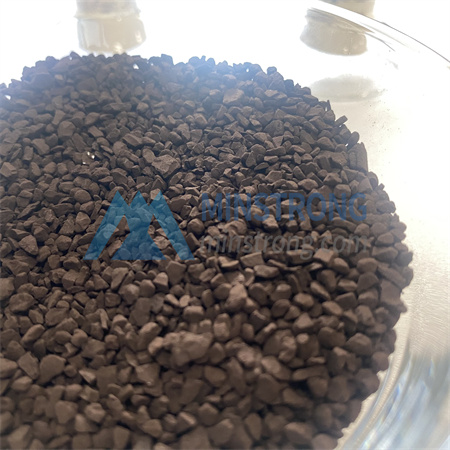
1. Why Can Ozone Decomposition Catalysts Improve Ozone Treatment Efficiency?
Ozone is a highly reactive oxidizing gas that can decompose on the surface of a catalyst and ultimately be converted into oxygen. The role of a catalyst is not simply to adsorb ozone. Instead, the catalyst provides active surface sites that facilitate the ozone decomposition reaction, allowing the process to proceed efficiently under relatively mild operating conditions.
Therefore, factors such as the number of surface active sites, surface oxygen species, redox properties, pore structure, and specific surface area can affect ozone adsorption and subsequent decomposition. A catalyst with a suitable surface structure can promote effective contact between the gas and active sites, thereby improving ozone conversion.
2. Catalyst Activity Is the Foundation of High Treatment Efficiency
Under the same temperature, ozone concentration, and space velocity, the intrinsic activity of the catalyst is one of the key factors affecting ozone decomposition efficiency.
Higher catalyst activity generally means that ozone can be decomposed more rapidly, providing greater treatment capacity per unit volume of catalyst. However, catalyst selection should not be based solely on the highest conversion rate obtained under a specific laboratory condition. Activity retention, mechanical strength, moisture resistance, and long-term operating stability should also be considered.
For continuously operating industrial systems, a catalyst with high initial activity but rapid performance deterioration may not provide the best overall performance.
3. Control Space Velocity to Increase Gas-Catalyst Contact Time
Space velocity is an important engineering parameter affecting ozone decomposition efficiency.
When the gas flow rate increases while the catalyst loading remains unchanged, the gas passes through the catalyst bed more quickly, reducing the effective contact time between the gas and catalyst. If the actual space velocity exceeds the applicable operating range of the catalyst and reactor, ozone may not have sufficient time to react before leaving the catalyst bed, resulting in an elevated outlet ozone concentration.
Therefore, when outlet ozone concentration increases, the actual gas flow rate, catalyst loading, and catalyst bed height should be checked before concluding that the catalyst itself lacks sufficient activity.
Proper space velocity should be determined by considering the inlet ozone concentration, target outlet concentration, catalyst activity, and reactor dimensions together.
4. Why Does Humidity Affect Ozone Decomposition Efficiency?
Gas streams in real-world ozone treatment systems are rarely completely dry. In particular, water treatment, wet-process operations, and certain industrial exhaust applications may involve relatively high humidity, making water vapor an important factor affecting catalyst performance.
Water molecules may compete with ozone for adsorption sites on the catalyst surface. When excessive water is adsorbed, the availability of active sites for ozone may decrease, potentially reducing the ozone decomposition rate.
Therefore, when treating high-humidity gas streams, moisture resistance and performance stability under changing humidity conditions should be considered during catalyst selection. Where the process allows, gas dehumidification or other appropriate pretreatment measures may also help reduce the influence of moisture on the catalytic reaction.
5. Optimize Catalyst Form and Particle Size to Improve Gas-Solid Contact
The physical form and particle size of a catalyst can also affect actual treatment efficiency.
Powdered catalysts can provide a large external contact area, but they may present challenges in industrial fixed-bed systems, including loading, pressure drop, and dust control. Granular catalysts are generally easier to load and replace, but particles that are too large may reduce gas-solid contact efficiency, while particles that are too small can increase system pressure drop.
Honeycomb catalyst structures can provide defined flow channels and improve gas flow characteristics. They can be suitable for certain applications requiring high gas flow rates and relatively low pressure drop.
Therefore, a larger specific surface area does not necessarily mean better overall catalyst performance. Practical selection should consider catalytic activity, particle size, pore structure, mechanical strength, pressure drop, and gas flow rate as a whole.
6. Improve Gas Distribution to Prevent Flow Short-Circuiting
In industrial reactors, even when the catalyst itself meets the required performance specifications, uneven gas distribution can reduce actual ozone treatment efficiency.
For example, part of the gas may preferentially pass through areas with lower flow resistance, creating local flow short-circuiting. This reduces contact between the gas and catalyst in those areas, while other portions of the catalyst bed may not be fully utilized.
Therefore, in addition to selecting an appropriate catalyst, attention should be paid to gas inlet distribution, bed height, loading uniformity, and internal reactor flow distribution. Ensuring that gas passes evenly through the entire catalyst bed can often be more effective than simply increasing the amount of catalyst.
7. Temperature and Ozone Concentration Must Also Be Matched to the Process
Temperature can affect the ozone decomposition rate and surface reaction processes on the catalyst. Different catalyst systems may have different suitable operating temperature ranges.
At the same time, when inlet ozone concentration increases, the ozone load imposed on the catalyst also increases. If the gas flow rate and catalyst loading are not adjusted accordingly, the outlet ozone concentration may gradually increase.
Therefore, catalyst efficiency should not be evaluated independently of actual operating conditions. A more appropriate evaluation considers ozone concentration, temperature, humidity, gas flow rate, and space velocity as an integrated set of parameters.
8. How Should Reduced Ozone Decomposition Efficiency Be Diagnosed?
When the outlet ozone concentration suddenly increases, troubleshooting should follow a systematic sequence.
First, check whether the inlet ozone concentration or gas flow rate has changed. Second, verify whether the actual space velocity exceeds the design conditions. Next, check temperature, humidity, and gas distribution. Finally, determine whether the catalyst has experienced aging, contamination, or deactivation.
This troubleshooting approach helps prevent every decline in ozone removal efficiency from being incorrectly attributed to catalyst failure.
For catalysts that have been operating for an extended period, performance trends in outlet ozone concentration should also be evaluated rather than determining catalyst failure based on a single measurement.
9. How Can Ozone Decomposition Catalyst Treatment Efficiency Be Improved Systematically?
From an engineering perspective, improving ozone decomposition efficiency can be summarized in four areas:
Select a catalyst suitable for the operating conditions, maintain an appropriate space velocity, ensure sufficient and uniform gas-solid contact, and control operating parameters such as temperature and humidity.
For systems with high inlet ozone concentrations, catalyst treatment capacity and loading should be evaluated carefully. For high-humidity gas streams, moisture resistance should receive greater attention. Where pressure drop is strictly limited, catalyst particle size, physical form, and bed configuration should be considered together.
Therefore, effective optimization does not simply mean increasing the amount of catalyst. The key is to ensure that catalyst performance is properly matched to the actual process conditions.
10. Summary
The treatment efficiency of an ozone decomposition catalyst is determined by the combined effects of catalyst properties and engineering conditions. Catalytic activity determines reaction capability, space velocity determines effective contact time, humidity can affect the availability of surface active sites, catalyst form influences mass transfer and pressure drop, and gas distribution determines how effectively the catalyst bed is utilized.
Therefore, practical ozone treatment systems should be designed and optimized based on inlet ozone concentration, gas flow rate, temperature, humidity, and the required outlet ozone concentration. By optimizing both the catalyst and operating conditions, it is possible to improve ozone removal efficiency while also increasing catalyst utilization and long-term operating stability.
author:kaka
date:2026/8/26


 minstrong