What Industries Use Ozone Decomposition Catalysts?
Ozone decomposition catalysts are mainly used in industrial systems where residual ozone needs to be controlled. Typical application areas include water treatment, industrial wastewater treatment, ozone generation systems, air purification, and other production environments that use ozone for oxidation or disinfection.
Because ozone has strong oxidation properties, a certain amount of unreacted ozone usually remains after completing oxidation, sterilization, or pollutant degradation processes. Direct discharge of residual ozone may affect operating environments and increase safety management requirements.
Ozone decomposition catalysts reduce the stability of ozone molecules through catalytic reactions, accelerating their conversion into oxygen. Therefore, catalytic ozone decomposition has become an important technology for controlling ozone emissions in industrial ozone applications.
Why Do Industrial Ozone Systems Need Ozone Decomposition Catalysts?
Ozone is widely used in industrial applications due to its strong oxidation capability, including organic pollutant degradation, sterilization, water purification, and air treatment. However, because ozone is highly reactive, residual ozone after treatment must be properly removed.
Traditional methods mainly rely on natural ozone decomposition or physical treatment methods. However, natural decomposition is strongly affected by temperature, humidity, and gas residence time, making it difficult to meet the requirements of continuous industrial operation.
Ozone decomposition catalysts lower the activation energy of ozone decomposition reactions, allowing ozone to be rapidly converted into oxygen under relatively mild conditions. The catalytic reaction can be summarized as:
2O₃ → 3O₂
During the catalytic process, ozone molecules are first adsorbed on the catalyst surface, where active oxygen species are generated and transferred. The reaction continues as oxygen is released and active sites are regenerated.
Applications of Ozone Decomposition Catalysts in Water Treatment
Residual Ozone Treatment in Drinking Water Treatment
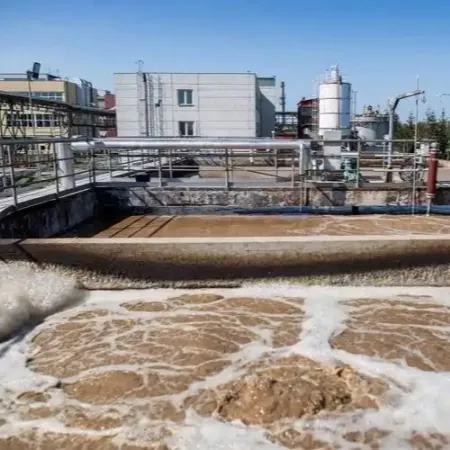
Ozone oxidation technology is commonly used in water treatment processes to remove organic compounds, reduce color, and control microorganisms. Since a certain ozone concentration is required to achieve effective oxidation, residual ozone is often present after the reaction.
In water treatment systems, ozone decomposition catalysts are typically installed in the off-gas treatment unit to decompose unused ozone before discharge. This helps improve system safety and reduce the impact of ozone on equipment and surrounding environments.
Ozone Catalytic Decomposition in Industrial Wastewater Treatment
Industrial wastewater often contains complex organic pollutants that are difficult to degrade through conventional treatment methods. Ozone oxidation can improve biodegradability and assist in reducing pollutant loads. However, ozone utilization is not always complete, leaving residual ozone in the exhaust gas.
By incorporating ozone decomposition catalysts, industrial wastewater treatment systems can effectively treat ozone-containing off-gas and improve the overall efficiency and reliability of ozone oxidation processes.
Applications of Ozone Decomposition Catalysts in Ozone Generation Systems
Ozone generation systems are widely used in industrial disinfection, oxidation treatment, and air purification applications. Since ozone generators often operate continuously, effective off-gas treatment is essential for maintaining stable system performance.
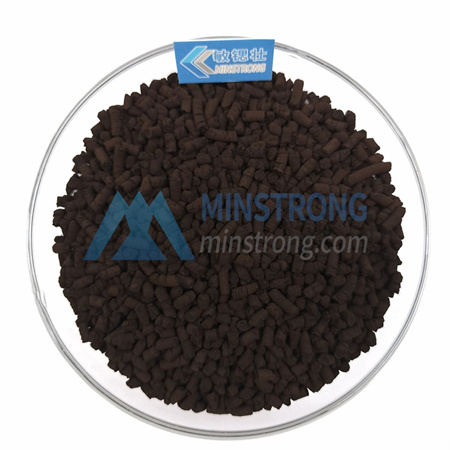
Installing ozone decomposition catalysts at the outlet of ozone generation equipment allows unused ozone to be rapidly converted into oxygen. Compared with relying only on natural ozone decay, catalytic decomposition provides faster reaction rates, smaller equipment requirements, and better suitability for continuous operation.
For different ozone generation systems, catalyst selection should consider ozone concentration, gas flow rate, operating temperature, and humidity conditions to ensure long-term stable performance.
Applications of Ozone Decomposition Catalysts in Air Purification and Industrial Environments
Besides water treatment applications, ozone decomposition catalysts are also used in certain industrial air treatment systems. When ozone is applied for air disinfection, odor control, or pollutant oxidation, residual ozone in the air needs to be further reduced.
In industrial environments, clean areas, and air treatment systems using ozone technology, ozone decomposition catalysts can serve as an effective purification material to remove remaining ozone before air release.
These applications usually require catalysts with high low-temperature activity, long-term stability, and good adaptability to changing humidity conditions.
Key Factors Affecting the Performance of Ozone Decomposition Catalysts
Although ozone decomposition catalysts can effectively accelerate ozone removal, actual performance depends on multiple operating conditions.
|
Influencing Factor
|
Impact on Catalytic Performance
|
|
Ozone Concentration
|
Determines the oxidation load on the catalyst and affects service life.
|
|
Gas Flow Rate
|
Affects the contact time between ozone and catalyst, influencing decomposition efficiency.
|
|
Temperature
|
Different catalyst systems have different activity ranges under various temperatures.
|
|
Humidity
|
Moisture may influence ozone adsorption and active site reactions.
|
|
Catalyst Structure
|
Pore structure, particle size, and surface area affect mass transfer efficiency.
|
How to Select Ozone Decomposition Catalysts According to Industrial Requirements?
The requirements for ozone decomposition catalysts vary among different industries. Therefore, catalyst selection should not focus only on ozone removal efficiency but also consider actual operating conditions.
For high-concentration ozone off-gas treatment, attention should be given to oxidation resistance and long-term stability. For air purification applications, low-temperature catalytic activity is often a key consideration. For water treatment systems, performance under high humidity conditions and service life are important factors.
Catalyst structure is also an important factor in engineering design. Granular catalysts are commonly used in fixed-bed reaction systems, while customized catalyst structures may be selected according to equipment space limitations and airflow conditions.
Conclusion
Ozone decomposition catalysts are widely applied in water treatment, industrial wastewater treatment, ozone generation systems, air purification, and other industrial environments. Their primary function is to accelerate the catalytic conversion of residual ozone into oxygen, reducing ozone concentration and improving system safety.
As ozone technology continues to expand across industrial applications, effective ozone off-gas treatment has become an important part of reliable system operation. Selecting the appropriate ozone decomposition catalyst requires comprehensive consideration of ozone concentration, gas flow rate, temperature, humidity, and equipment design to achieve stable and efficient ozone catalytic decomposition.
author:kaka
date:2026/9/4


 minstrong