What are the Mainstream Preparation Methods for Hogallat Catalysts?
Hogallat catalysts, as core industrial catalytic materials for efficient carbon monoxide removal at room temperature, use manganese dioxide and copper oxide as core active components. Their preparation process directly determines the product's catalytic activity, stability, and suitable application scenarios. The preparation methods of mainstream horgalat catalysts on the market each have their own focus, catering to different needs such as industrial mass production, high-end customization, and laboratory research and development. They also serve as core references for industry procurement and technology selection. The following details four mainstream preparation processes:
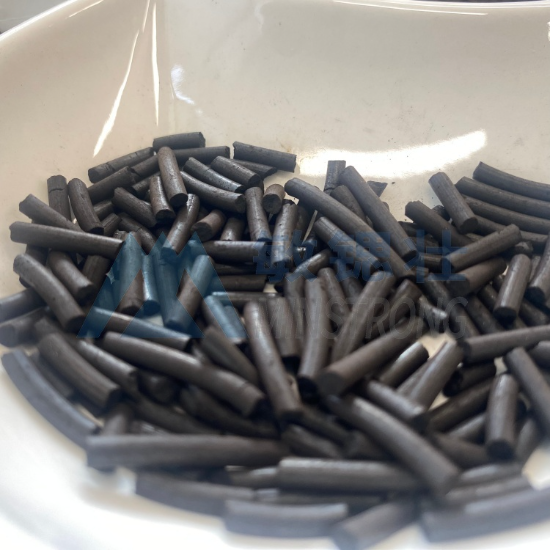
1. Co-precipitation Method (Preferred for Industrial Mass Production)
This is currently the most commonly used industrial preparation process for horgalat catalysts. It is technologically mature, cost-controllable, and can achieve uniform dispersion of active components. The core steps involve mixing manganese and copper salts in a specific ratio to form a solution, adding a precipitant to adjust the pH value to form a precursor precipitate, followed by aging, washing, drying, and high-temperature calcination to obtain the active oxide. Finally, it is extruded and granulated. Catalysts produced by this process have stable performance and high catalytic efficiency, suitable for mass production, and widely used in conventional scenarios such as industrial waste gas treatment, air separation purification, and security protection.
2. Impregnation Method (Dedicated to Supported Modification)
This method is mainly used to prepare supported horgalat catalysts, often used to improve the mechanical strength and resistance to poisoning. First, porous supports such as alumina, honeycomb ceramics, and activated carbon are selected. A prepared metal salt solution is then impregnated and loaded onto the surface and pores of the support, followed by drying and calcination to fix the active components. This method can be customized into special shapes such as columnar and honeycomb structures, suitable for large-scale waste gas treatment equipment and closed-space purification devices, balancing catalytic performance and equipment compatibility.
3. Sol-Gel Method (High-End Precision Preparation)
This is a high-end, refined process, often used in the research and development of high-performance hopalat. The product has a large specific surface area, excellent low-temperature activity, and water resistance. Using organometallic salts as raw materials, it is produced through complexation, sol-gelation, low-temperature drying, and calcination. The active components have extremely high dispersion, solving the industry pain point of easy deactivation under high humidity environments. It is suitable for high-end scenarios such as fuel cell hydrogen source purification and precision monitoring equipment. The disadvantages are high cost and difficulty in mass production.
4. Mechanical Mixing Method (Simple Emergency Process)
This is the simplest process, directly ball-milling and mixing manganese and copper oxide powders according to a specific ratio, adding a binder, and then shaping. While requiring no complex reaction equipment and offering rapid trial production, the active components are only physically mixed, resulting in weaker catalytic performance and stability. This makes it suitable only for small-scale laboratory testing and preliminary formulation validation, and not for long-term large-scale industrial applications.
Overall, co-precipitation method products are preferred for industrial bulk purchases. For customized applications under specific conditions, impregnation or sol-gel processes can be used. The specific process directly determines the actual performance and lifespan of the hogallat catalyst.
Author: Hazel
Date: 2026-03-20


 minstrong