How to Select the Right Carbon Monoxide Catalyst for Industrial Gas Purification?
Selecting the right carbon monoxide catalyst for industrial gas purification requires a comprehensive evaluation of catalytic activity, operating temperature, gas composition, resistance to contaminants, service life, and actual operating conditions. Rather than focusing only on catalyst price or a single performance parameter, the most effective approach is to select catalytic materials that match the specific process conditions. A high-performance CO catalyst should provide excellent low-temperature catalytic activity, long-term stability, and strong adaptability to complex industrial environments, ensuring efficient and continuous carbon monoxide removal.
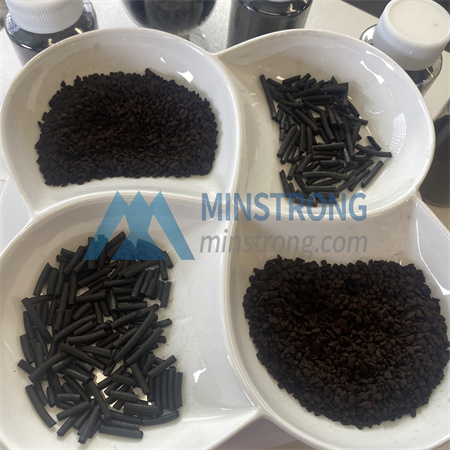
Why Is Carbon Monoxide Removal Necessary in Industrial Gas Purification?
Carbon monoxide (CO) is a colorless, odorless, and toxic gas that is commonly found in industrial processes such as combustion systems, synthesis gas production, air separation units, metal processing, and chemical manufacturing.
Because carbon monoxide has a strong affinity for hemoglobin and can interfere with oxygen transport in the human body, effective CO control is critical in industrial environments involving worker safety, enclosed spaces, and high-purity gas production.
In addition to safety concerns, even low concentrations of carbon monoxide can affect downstream industrial processes. For example, high-purity gas production, precision manufacturing, and specialty gas applications often require strict control of CO impurities. Therefore, efficient gas purification technologies are required for deep CO removal.
Common carbon monoxide treatment methods include adsorption, thermal oxidation, and catalytic oxidation. Among these technologies, CO catalytic oxidation has become an important solution for industrial gas purification because it can achieve efficient CO conversion at relatively low temperatures while reducing energy consumption.
How Does a Carbon Monoxide Catalyst Work?
The primary function of a carbon monoxide catalyst is to reduce the activation energy required for the reaction between carbon monoxide and oxygen, allowing oxidation to occur efficiently at lower temperatures.
The basic chemical reaction is:
2CO + O₂ → 2CO₂
During catalytic oxidation, oxygen molecules are first adsorbed on active sites located on the catalyst surface and converted into reactive oxygen species. At the same time, CO molecules are adsorbed and react with the active oxygen to form carbon dioxide. After CO₂ desorption, the active sites become available for the next reaction cycle.
Metal oxide catalytic materials play an important role in this process. For example:
-
Manganese dioxide (MnO₂): Provides strong redox capability and promotes oxygen mobility, improving CO oxidation performance.
-
Copper oxide (CuO): Participates in oxygen transfer processes and accelerates carbon monoxide oxidation reactions.
-
Copper-manganese oxide systems: Utilize the synergistic effects between different metal oxides to improve catalytic activity at lower temperatures.
Therefore, the performance of a carbon monoxide catalyst depends not only on the active components but also on factors such as surface area, pore structure, surface chemistry, and catalyst forming technology.
Key Performance Parameters for Selecting an Industrial CO Catalyst
1. Catalytic Activity and CO Conversion Efficiency
Catalytic activity is one of the most important indicators for evaluating carbon monoxide catalyst performance.
The main factors affecting catalytic activity include:
-
Type and distribution of active components;
-
Number of active sites on the catalyst surface;
-
Specific surface area of the material;
-
Oxygen adsorption and release capability.
For low-concentration CO purification systems, the catalyst should maintain high activity at relatively low temperatures. For high-concentration CO streams, the catalyst must demonstrate strong durability under continuous high-load operation.
2. Operating Temperature Range
Different industrial gas purification systems operate under different temperature conditions. Therefore, operating temperature is a key factor when selecting a CO catalyst.
|
Application Environment
|
Temperature Characteristics
|
Key Catalyst Requirements
|
|
Low-temperature gas purification
|
Limited heat supply
|
Low-temperature catalytic activity
|
|
Industrial exhaust treatment
|
Large temperature fluctuations
|
Wide operating temperature adaptability
|
|
High-purity gas purification
|
Continuous stable operation
|
Long-term activity retention
|
For energy-sensitive industrial processes, low-temperature CO catalytic oxidation capability can reduce additional heating requirements and improve overall system efficiency.
3. Gas Composition and Resistance to Contaminants
Actual industrial gas streams usually contain multiple components. Besides CO and oxygen, they may also include water vapor, dust, sulfur compounds, and other impurities.
These substances may cause:
-
Blocking of active sites on the catalyst surface;
-
Reduction of oxygen adsorption capability;
-
Loss of catalytic activity over time.
Therefore, selecting an appropriate carbon monoxide catalyst requires a detailed analysis of actual operating conditions, including CO concentration, oxygen content, moisture level, gas flow rate, and contaminant types.
4. Catalyst Lifetime and Mechanical Strength
Industrial gas purification systems often require continuous operation for long periods. Therefore, catalysts must provide not only high activity but also excellent mechanical stability.
How to Select Carbon Monoxide Catalysts for Different Industrial Gas Purification Applications?
High-Purity Gas Purification Applications
In some high-purity gas production processes, the concentration of carbon monoxide may be relatively low, but extremely strict impurity control requirements are required for the final gas quality.
For these applications, the key considerations when selecting a CO catalyst include:
-
Deep CO removal capability;
-
Low impurity release from catalyst materials;
-
Long-term stable catalytic performance.
The catalyst should maintain efficient CO conversion under low-concentration conditions rather than only showing high removal efficiency under ideal laboratory conditions.
Industrial Exhaust Gas Treatment Applications
Industrial exhaust gas treatment systems usually have characteristics such as large gas flow rates, fluctuating operating conditions, and complex gas compositions.
For these applications, catalyst selection should consider:
-
Variation range of CO concentration;
-
Gas temperature fluctuations;
-
Water vapor content;
-
Potential catalyst poisons and contaminants.
When treating complex industrial gas streams, appropriate pretreatment processes such as filtration and moisture removal may be required to reduce catalyst deactivation and extend service life.
Safety Protection and Special Gas Treatment Applications
In some special industrial environments, rapid CO reduction is required to protect personnel safety and equipment operation.
These applications place greater emphasis on:
-
Room-temperature catalytic activity;
-
Fast response capability;
-
Stable performance under emergency conditions.
Hopcalite-type catalytic materials can promote carbon monoxide oxidation at relatively low temperatures, making them suitable for applications where rapid CO conversion is required.
Common Mistakes When Selecting Carbon Monoxide Catalysts
Mistake 1: Selecting Catalysts Based Only on Purchase Price
The initial purchase cost of a catalyst is only one part of the total operating cost.
If catalyst activity is insufficient, the system may require:
-
Larger catalyst volumes;
-
Higher operating temperatures;
-
More frequent catalyst replacement.
Therefore, catalyst selection should consider the total lifecycle cost, including energy consumption, maintenance requirements, and replacement frequency.
Mistake 2: Focusing Only on Initial Removal Efficiency
Some catalysts may show excellent initial CO removal performance but experience activity decline during long-term operation due to moisture, impurities, or unfavorable operating conditions.
For industrial applications, long-term stability is often more important than short-term performance.
Mistake 3: Ignoring Actual Operating Conditions
Industrial gas purification systems vary significantly in CO concentration, temperature, humidity, flow rate, and gas composition.
Using the same type of catalyst for different operating environments without technical evaluation may result in reduced purification efficiency, shortened service life, or unstable operation.
Future Development Trends of Industrial CO Removal Technologies
With increasingly strict industrial emission standards and higher requirements for gas purity, carbon monoxide catalyst technologies are continuously evolving toward higher efficiency, longer lifetime, and better environmental adaptability.
The major development trends include:
1. Low-Temperature High-Activity Catalysts
Future CO catalysts will continue to focus on improving oxygen mobility and surface reaction activity, enabling efficient CO oxidation at lower temperatures.
Lower operating temperatures can reduce energy consumption and improve the overall efficiency of gas purification systems.
2. Improved Resistance to Moisture and Contaminants
Industrial gas streams often contain moisture and trace impurities that can negatively affect catalyst performance.
Developing catalysts with stronger resistance to water vapor and poisoning substances will be an important direction for long-term industrial applications.
3. Advanced Composite Metal Oxide Catalyst Systems
Composite metal oxide catalysts can utilize the synergistic effects between different active components to improve redox performance, oxygen transfer ability, and structural stability.
Optimization of catalyst composition, pore structure, and forming technology will further improve performance in complex industrial environments.
author:kaka
date:2026/7/22


 minstrong