Is a Catalyst Required for Ozone Decomposition?
Under natural conditions, ozone does indeed decompose; however, in most engineering contexts, the rate of this process falls far short of the standards required for rapid, safe neutralization. The core conclusion is this: relying solely on ozone self-decomposition is insufficient to resolve practical tail gas emission challenges; instead, catalysts must be employed to significantly accelerate the decomposition rate, thereby ensuring that ozone concentrations remain below established safety thresholds.
I. Can Ozone Decompose on Its Own?
From a thermodynamic perspective, ozone (O₃)—an allotrope of oxygen—exists in a thermodynamically unstable state and will spontaneously decompose into oxygen (O₂), following the reaction equation: 2O₃ → 3O₂. This process occurs readily at standard temperature and pressure, requiring no continuous external energy input.
However, the critical issue lies in the kinetics of the reaction. The self-decomposition of ozone follows either first- or second-order reaction kinetics, and its half-life is profoundly influenced by factors such as temperature, concentration, humidity, and the catalytic effects of the container walls. In dry, clean air, the half-life of low-concentration ozone can extend to several hours or even longer; even in moderately humid environments, the half-life typically remains in the range of several tens of minutes. This implies that if one were to rely solely on self-decomposition, ozone-containing tail gases would require an extraordinarily long residence time to decay below the safety threshold of 0.1 ppm prior to discharge. For continuous-operation processes—such as those found in water treatment, flue gas abatement, or semiconductor manufacturing—such a strategy of "natural waiting" is, from an engineering standpoint, entirely unfeasible.
II. The Role of Catalysts: Overcoming the Activation Energy Barrier
Fundamentally, the role of a catalyst is to alter the reaction pathway and lower the apparent activation energy, thereby boosting the decomposition rate by orders of magnitude. The decomposition of ozone on a catalyst surface typically follows either the Langmuir-Hinshelwood or Eley-Rideal mechanism: ozone molecules first adsorb onto active sites, subsequently dissociating into oxygen molecules and surface-bound active oxygen species. These species then either recombine to form gaseous oxygen or are consumed by participating in other oxidation reactions. This pathway bypasses the formation of high-energy intermediates required for gas-phase auto-decomposition, thereby enabling high reaction rates to be maintained at ambient temperatures—or even at low temperatures.
Notably, the catalyst does not function merely as a "consumable" material; ideally, its active centers can be continuously regenerated. However, in practical applications, factors such as surface contamination, competitive adsorption by water molecules, or the accumulation of intermediate products can gradually lead to deactivation. Consequently, the long-term performance of a catalyst serves as a critical metric for evaluating its industrial value.
 III. Under What Circumstances Is a Catalyst Indispensable?
This can be determined based on three primary factors:
1. Mandatory Emission Limits
Environmental protection standards across various nations impose strict upper limits on ozone emissions. For instance, the instantaneous exposure limit within a workshop environment is typically set between 0.1 and 0.3 ppm, while requirements for exhaust gas emissions are even more stringent, often demanding concentrations as low as the ppm or even ppb level. Relying solely on auto-decomposition is woefully insufficient to achieve such precise concentration control targets; thus, catalysts become the sole technological guarantee for ensuring regulatory compliance.
2. Processes with Limited Residence Time
Industrial ozone destructors are typically designed with high space velocities—often ranging from several thousand to tens of thousands of h⁻¹—resulting in a gas residence time of less than one second within the catalytic bed. Under such conditions, achieving a decomposition efficiency exceeding 99% is virtually impossible without the aid of a catalyst.
3. Harsh Environmental Temperature and Humidity Conditions
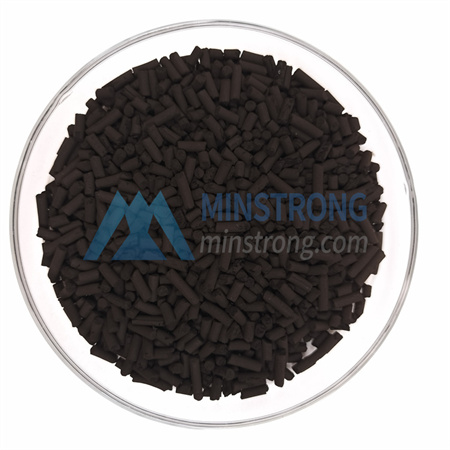
Certain applications require operation under conditions of high humidity (RH >90%) or low temperature. The rate of ozone auto-decomposition diminishes significantly under such cold and humid conditions. In contrast, high-performance catalysts—such as materials like "Minsenzhuang," which utilize specialized manganese oxides as their active components—can maintain stable decomposition efficiencies even under these harsh conditions. Through surface hydrophobic modification and the presence of abundant oxygen vacancies, these catalysts ensure that process control remains unaffected by seasonal variations or geographical location.
IV. Supplementary Considerations Regarding Catalytic Decomposition Methods
In addition to catalytic decomposition—which is often the mandatory choice—engineering practice also encompasses alternative pathways for ozone elimination, such as thermal decomposition and photodissociation. Thermal decomposition requires heating the gas to temperatures exceeding 300°C to achieve industrially viable reaction rates; consequently, its energy consumption is extremely high, and it is typically employed only in specific scenarios involving high-temperature waste gases. The efficiency of UV-induced decomposition is constrained by the optical path length and ozone concentration, making it difficult to effectively treat high-flow, high-concentration gas streams. In contrast, catalytic decomposition operates at ambient temperature and pressure, consumes very little energy, and utilizes compact equipment, making it the most widely adopted solution.
III. Under What Circumstances Is a Catalyst Indispensable?
This can be determined based on three primary factors:
1. Mandatory Emission Limits
Environmental protection standards across various nations impose strict upper limits on ozone emissions. For instance, the instantaneous exposure limit within a workshop environment is typically set between 0.1 and 0.3 ppm, while requirements for exhaust gas emissions are even more stringent, often demanding concentrations as low as the ppm or even ppb level. Relying solely on auto-decomposition is woefully insufficient to achieve such precise concentration control targets; thus, catalysts become the sole technological guarantee for ensuring regulatory compliance.
2. Processes with Limited Residence Time
Industrial ozone destructors are typically designed with high space velocities—often ranging from several thousand to tens of thousands of h⁻¹—resulting in a gas residence time of less than one second within the catalytic bed. Under such conditions, achieving a decomposition efficiency exceeding 99% is virtually impossible without the aid of a catalyst.
3. Harsh Environmental Temperature and Humidity Conditions
Certain applications require operation under conditions of high humidity (RH >90%) or low temperature. The rate of ozone auto-decomposition diminishes significantly under such cold and humid conditions. In contrast, high-performance catalysts—such as materials like "Minsenzhuang," which utilize specialized manganese oxides as their active components—can maintain stable decomposition efficiencies even under these harsh conditions. Through surface hydrophobic modification and the presence of abundant oxygen vacancies, these catalysts ensure that process control remains unaffected by seasonal variations or geographical location.
IV. Supplementary Considerations Regarding Catalytic Decomposition Methods
In addition to catalytic decomposition—which is often the mandatory choice—engineering practice also encompasses alternative pathways for ozone elimination, such as thermal decomposition and photodissociation. Thermal decomposition requires heating the gas to temperatures exceeding 300°C to achieve industrially viable reaction rates; consequently, its energy consumption is extremely high, and it is typically employed only in specific scenarios involving high-temperature waste gases. The efficiency of UV-induced decomposition is constrained by the optical path length and ozone concentration, making it difficult to effectively treat high-flow, high-concentration gas streams. In contrast, catalytic decomposition operates at ambient temperature and pressure, consumes very little energy, and utilizes compact equipment, making it the most widely adopted solution.
In summary, although ozone possesses a thermodynamic propensity for self-decomposition, engineering realities dictate that its abatement must rely on catalytic pathways. The critical factor in determining whether a catalyst is required lies not in ozone's inherent ability to decompose, but rather in the engineering suitability of the decomposition rate—specifically, when the self-decomposition half-life significantly exceeds the buffer time permissible within the process, the catalyst transitions from being an "optional optimization feature" to an "essential control unit." A firm grasp of this logic is indispensable for making sound technical decisions when designing ozone application systems.
author:kaka
date:2026/5/14


 minstrong