How to Improve the Decomposition Efficiency and Service Life of Ozone Decomposition Catalysts?
In industrial ozone treatment systems, achieving high ozone decomposition efficiency and long catalyst service life depends not only on the catalyst material itself, but also on operating conditions, gas characteristics, equipment design, process parameters, and maintenance practices. Practical experience shows that controlling temperature and humidity, preventing catalyst poisoning, optimizing airflow distribution and space velocity, and implementing proper maintenance procedures are often more effective than simply increasing catalyst loading. A systematic optimization approach is essential for maximizing ozone removal performance while extending catalyst lifespan.
Key Factors Affecting Ozone Decomposition Performance
Ozone decomposition catalysts accelerate the conversion of ozone (O₃) into oxygen (O₂). During this process, ozone molecules are first adsorbed onto active sites on the catalyst surface and then undergo catalytic decomposition.
The number of active sites available on the catalyst surface determines how many ozone molecules can participate in the reaction within a given period. Therefore, catalysts with high specific surface area, optimized pore structures, and well-dispersed active components generally exhibit higher ozone decomposition efficiency.
However, even catalysts with the same chemical composition may perform differently under varying operating conditions. This indicates that catalyst performance is influenced not only by material properties but also by the actual process environment.
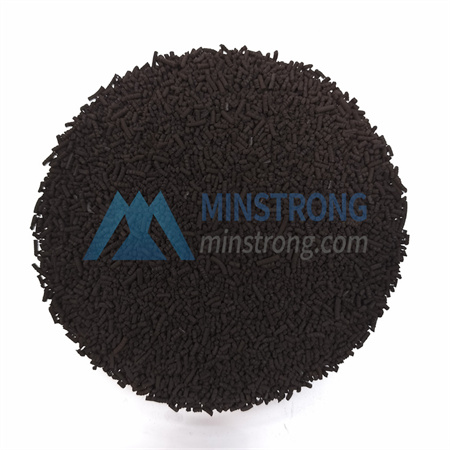
Why Temperature and Humidity Matter
Temperature is one of the most important parameters affecting ozone decomposition rates.
Within an appropriate operating range, higher temperatures can increase ozone activation and accelerate catalytic reactions. However, excessive temperatures may alter catalyst structure or cause active component migration over time, potentially reducing long-term stability.
The influence of humidity is more complex. Moderate levels of moisture may promote certain surface reactions, but excessive humidity can occupy active sites and reduce the contact between ozone molecules and the catalyst surface.
For continuously operating industrial systems, prolonged exposure to high humidity often accelerates catalyst deactivation. Therefore, moisture control measures or catalyst formulations with enhanced humidity resistance should be considered in high-humidity applications.
Preventing Catalyst Poisoning Is Critical for Longer Service Life
In many ozone treatment projects, catalyst lifespan is shortened not by natural aging but by catalyst poisoning caused by contaminants in the gas stream.
Compounds such as sulfur-containing gases, phosphorus compounds, siloxanes, oil mist, and particulate matter can accumulate on the catalyst surface and block active sites. As a result, ozone molecules are unable to effectively contact the catalyst, leading to a decline in decomposition efficiency.
For gas streams containing significant levels of impurities, installing filtration, mist removal, or other pretreatment systems upstream of the catalyst bed can significantly reduce contamination risks. Compared with frequent catalyst replacement, effective pretreatment is often more economical and reliable.
Space Velocity and Bed Design Directly Affect Catalyst Utilization
Ozone decomposition reactions require sufficient contact time between ozone molecules and the catalyst surface.
If gas velocity is too high, ozone may pass through the catalyst bed before complete decomposition occurs, resulting in elevated outlet ozone concentrations. Conversely, excessively low space velocity may increase equipment size and operating costs.
Proper catalyst bed thickness, catalyst particle size, and flow distribution design help ensure uniform gas flow throughout the reactor. This minimizes issues such as channeling, localized breakthrough, and dead zones.
In many practical applications, reduced ozone removal efficiency is not caused by catalyst deactivation but by poor reactor or catalyst bed design that limits effective catalyst utilization.
Proper Maintenance Significantly Extends Operating Life
Even under ideal operating conditions, dust and contaminants gradually accumulate on catalyst surfaces over time.
Regular monitoring of pressure drop, outlet ozone concentration, and catalyst bed condition helps identify performance deterioration before it becomes critical. For certain catalyst systems, appropriate cleaning or regeneration procedures may partially restore catalytic activity.
Establishing a routine operating data management program can improve system reliability and provide valuable information for estimating remaining catalyst life, helping prevent unexpected performance failures.
A Systematic Approach Delivers the Best Results
Optimizing ozone decomposition catalyst performance is fundamentally a system engineering challenge. Focusing solely on catalyst activity rarely delivers the best long-term results.
Instead, a comprehensive strategy that includes gas pretreatment, humidity control, temperature management, catalyst bed optimization, appropriate space velocity selection, and preventive maintenance can simultaneously improve ozone removal efficiency and extend catalyst service life.
For industrial ozone treatment projects, a well-designed system often contributes more to long-term performance and lower operating costs than simply selecting a catalyst with higher initial activity.
author:kaka
date:2026/6/24


 minstrong